Primary Bladder Neck Obstruction.
Most people believe that difficulty passing urine is a problem only older men face because of an enlarged prostate. But that isn’t always true.
If you’re in your 20s, 30s, or 40s and find yourself waiting for your urine to start, straining to empty your bladder, or feeling like your bladder never empties completely, don’t ignore it. One possible reason is a condition called Primary Bladder Neck Obstruction (PBNO).
Although not as widely known as prostate enlargement, PBNO is a real and treatable condition that can significantly affect quality of life.
What Is Primary Bladder Neck Obstruction?
Think of your bladder as a water tank and the bladder neck as the tap through which urine flows.
Normally, when you urinate, the bladder neck opens fully, allowing urine to pass easily.
In people with Primary Bladder Neck Obstruction, the bladder neck fails to open properly, even though there is no enlarged prostate, stone, or tumor blocking the passage.
As a result, urine has to squeeze through a narrow opening, making urination slow and difficult.
The condition is most commonly seen in young and middle-aged men, although it can also occur in women.
Common Symptoms
You may have PBNO if you notice:
- Difficulty starting urination
- Weak urine stream
- Needing to strain while passing urine
- Interrupted or stop-and-start urine flow
- Feeling that the bladder is not completely empty
- Frequent urination during the day
- Waking up multiple times at night to urinate
- Sudden urgency to urinate
- Burning sensation after prolonged straining
- Recurrent urinary tract infections in some patients
Many people continue suffering for years because they assume it is “normal” or believe they are too young to have a urinary problem.
Why Does It Happen?
Unlike prostate enlargement, PBNO is not caused by age.
The exact reason isn’t fully understood, but experts believe the muscles around the bladder neck do not relax properly during urination. This creates resistance to urine flow despite an otherwise healthy urinary tract.
Importantly, it is not caused by excessive masturbation, sexual activity, or infertility, which are common myths.
Who Is at Risk?
PBNO is more commonly seen in:
- Men aged 18–50 years
- Individuals with long-standing urinary symptoms
- Patients whose urine tests are repeatedly normal despite symptoms
- People treated multiple times for “UTI” without improvement
- Young men with poor urine flow despite a normal-sized prostate
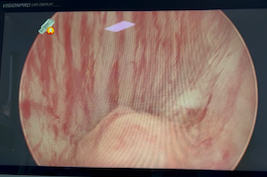
How Is PBNO Diagnosed?
Since the symptoms resemble several other urinary disorders, proper evaluation is essential.
Your urologist may recommend:
Medical History and Physical Examination
Understanding when symptoms began and how severe they are.
Urine Examination
To rule out infection or blood in urine.
Ultrasound
To check the kidneys, bladder, prostate size, and measure urine left behind after passing urine (post-void residual urine).
Uroflowmetry (Urine Flow Test)
This painless test measures how fast urine flows. Patients with PBNO usually have a reduced flow rate.
Video Urodynamic Study (Gold Standard)
This specialized test records bladder pressure while taking X-ray images during urination.
It helps confirm that the bladder neck is failing to open properly and differentiates PBNO from other causes like urethral stricture or poor bladder muscle function.
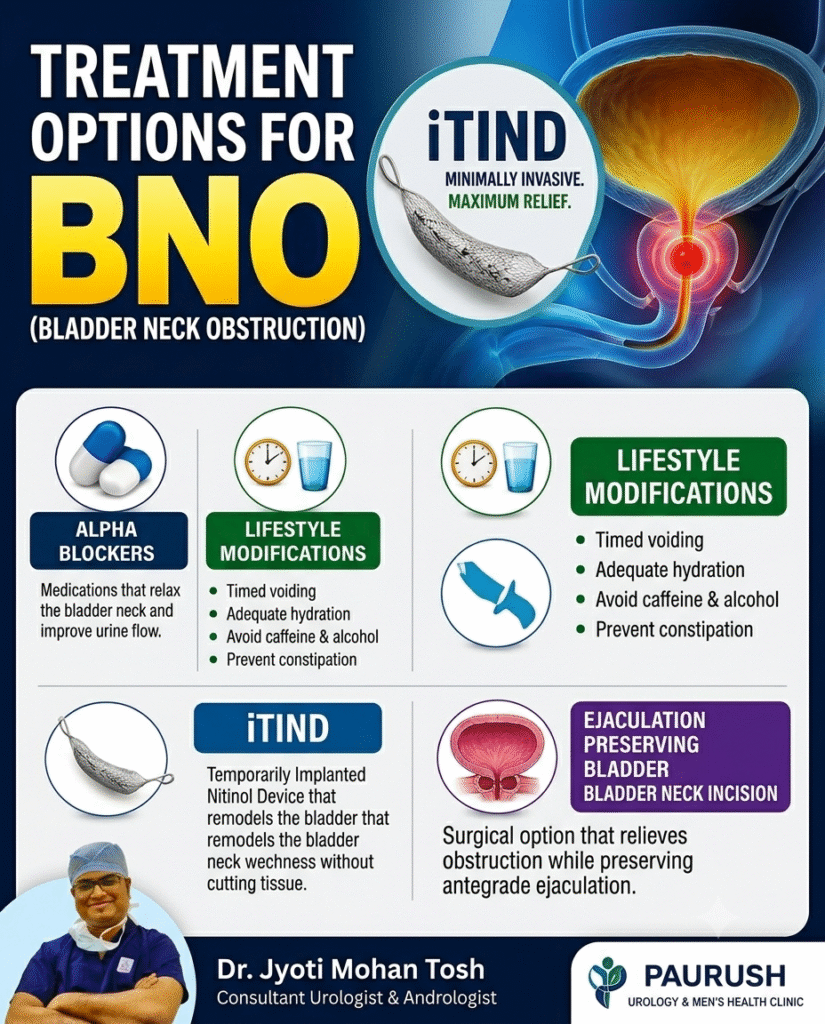
Treatment Options
The good news is that Primary Bladder Neck Obstruction is highly treatable.
Treatment depends on the severity of symptoms and the patient’s age and lifestyle.
1. Lifestyle Modifications
Patients with mild symptoms may benefit from simple changes:
- Avoid holding urine for long periods
- Stay well hydrated throughout the day
- Reduce excessive caffeine, alcohol, and carbonated beverages
- Treat constipation promptly
- Maintain a healthy body weight
- Empty the bladder regularly rather than waiting until it is overfilled
Although lifestyle changes alone may not cure PBNO, they often reduce symptom severity.
2. Alpha Blocker Medicines
These medications relax the bladder neck muscles, allowing urine to flow more easily.
Many young patients experience significant improvement with medication and can avoid surgery.
However, medicines may not work for everyone, and symptoms can return after stopping treatment.
3. iTind – A Modern, Incision-Free Solution
For patients who do not respond well to medicines or wish to avoid permanent surgery, iTind offers an exciting minimally invasive option.
What is iTind?
iTind is a temporary device placed inside the bladder neck using a cystoscope.
It gently reshapes the bladder neck over several days without removing tissue or making surgical cuts.
Advantages of iTind
- No cutting
- No laser
- No permanent implant
- Usually preserves ejaculation
- Day-care procedure
- Quick recovery
- Minimal discomfort
- Return to work within a few days
It is particularly attractive for young men who want symptom relief while preserving sexual function.
4. Ejaculation-Preserving Bladder Neck Incision (EP-BNI)
When obstruction is significant or symptoms persist despite medication, EP-BNI is considered one of the most effective long-term treatments.
During this minimally invasive endoscopic procedure, the surgeon makes carefully planned small incisions at the bladder neck to widen the opening.
Unlike traditional bladder neck incision techniques, the ejaculation-preserving approach is designed to relieve obstruction while minimizing the risk of retrograde ejaculation whenever appropriate.
Benefits of EP-BNI
- Excellent long-term symptom relief
- Stronger urine flow
- Better bladder emptying
- Short hospital stay
- Minimally invasive
- Focus on preserving normal ejaculation in suitable patients
What Happens If PBNO Is Left Untreated?
Ignoring persistent urinary symptoms can lead to:
- Progressive bladder damage
- Chronic urinary retention
- Recurrent urinary tract infections
- Bladder stones
- Kidney damage in severe cases
- Reduced quality of life due to poor sleep and constant urinary discomfort
Early diagnosis helps prevent these complications.
Don’t Ignore the Warning Signs
Difficulty passing urine at a young age is not normal, and it is not something you simply have to live with.
If you have a weak urine stream, need to strain while passing urine, or constantly feel that your bladder isn’t empty, consult a qualified urologist. A proper evaluation can identify the cause and guide you toward the most appropriate treatment—whether that means lifestyle changes, medication, iTind, or Ejaculation-Preserving Bladder Neck Incision (EP-BNI).
Modern treatments have made it possible to relieve symptoms while preserving quality of life and, in many cases, sexual function.
Frequently Asked Questions (FAQs)
Can young men develop urinary obstruction?
Yes. Primary Bladder Neck Obstruction is one of the common causes of urinary obstruction in young men despite having a normal-sized prostate.
Is PBNO the same as an enlarged prostate?
No. PBNO occurs because the bladder neck doesn’t open properly, whereas an enlarged prostate physically compresses the urethra.
Will medicines cure PBNO permanently?
Alpha blockers improve symptoms in many patients, but some may eventually require minimally invasive procedures for lasting relief.
Does surgery always affect ejaculation?
Modern techniques such as Ejaculation-Preserving Bladder Neck Incision (EP-BNI) are specifically designed to reduce this risk in appropriately selected patients.
Is iTind better than surgery?
The best treatment depends on your symptoms, bladder function, and overall evaluation. Your urologist will recommend the option most suitable for your condition.